About this shoot

"Marhaba, smell the jasmine and taste the olives. JAWWAL welcomes you to Palestine." - Palestinian mobile services provider welcome message.

The West Bank, also known as Judea and Samaria, is a region in Western Asia. Most of it has been under Israeli military occupation since 1967 when the Six-Day War took place. Israel fought against Egypt, Jordan, and Syria; it acquired the Gaza Strip, Sinai Peninsula (both from Egypt), Golan Heights (from Syria), East Jerusalem - and West Bank (both from Jordan).

Most of the West Bank (excluding East Jerusalem) was not annexed by Israel. Today, the West Bank is governed by the Palestinian National Authority. Its population is 1,714,845 people, including 327,750 Israelis (plus 192,000 Israelis who live in East Jerusalem). The Israelis live in settlements - there are 121 such settlements in the West Bank.

The EU, the US, the UN, and other organisations refer to the West Bank as Palestinian territory occupied by Israel. According to them, Israel had no legal right to retain the area, even if it was attacked and acted in self-defense. Israel disagrees with those claims and I will present their arguments as well.

Thanks goes to Khen for helping with captions!

Sources: 1, 2, 3, 4, 5, 6, 7, 8, 9, 10.

Uploaded on: 2011-12-31. Updated on: 2026-03-29.
Hebron

Hebron
Hebron is the largest city in the West Bank, its population being 165,000 Palestinians and 500 Jewish settlers. It is important for both Muslims, Jews, and Christians, who believe that Abraham, Isaac, Sarah and other Book of Genesis celebrities are buried there (in the Cave of the Patriarchs).
Today, Hebron is divided into two sectors, H1 and H2. H1 is under the control of the Palestinian Authority. H2 is under Jewish control. There are Palestinians living there in H2, but their population seems to be decreasing as they are leaving the area.
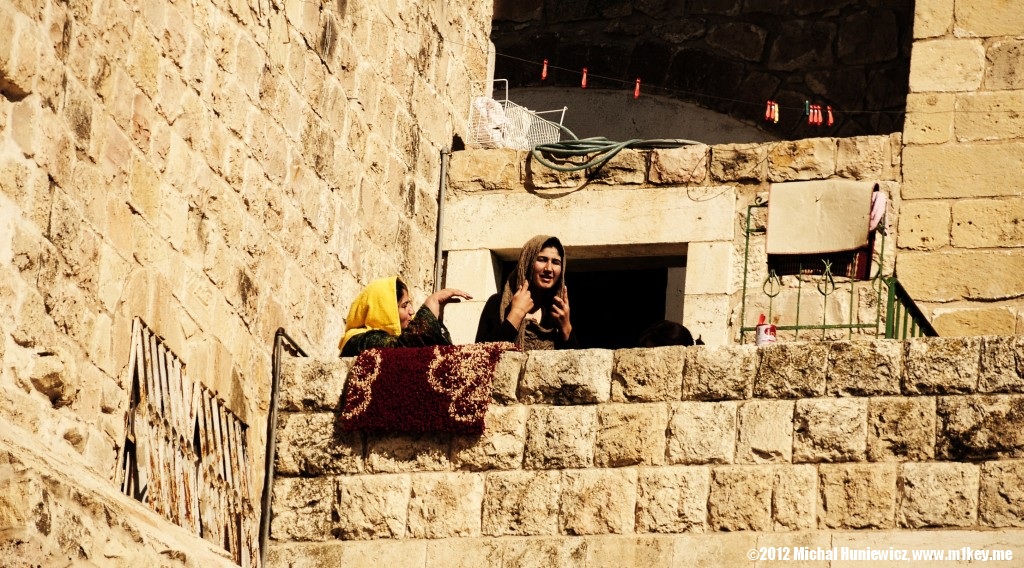
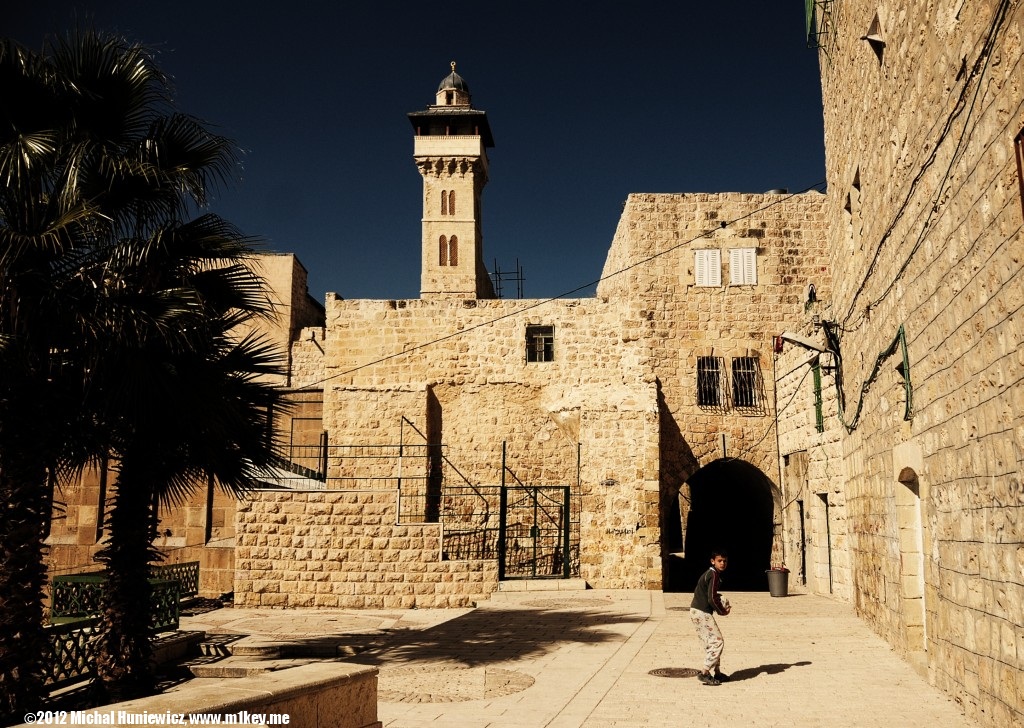
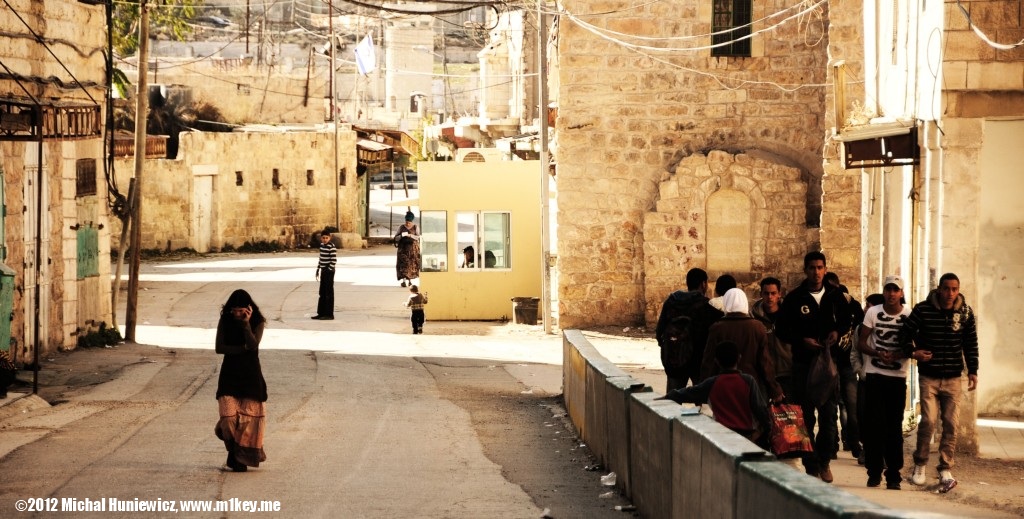
In the picture, you can see an Israeli girl on the Jewish side, and Palestinians on the other side. There's a military post further away and a military tower even further away. As for the girl, she seems to be an orthodox and most likely it is not acceptable for her to wear short sleeves and trousers, even in summer.
ISO 200, 112mm, f/5.3, 1/400s.

The Jews

The Jews
During the British Mandate, Jews lived in Hebron alongside Palestians until 1929, when the Hebron Massacre took place. Arab rioters killed 64 to 67 Jewish people, and ransacked their houses. 7 years later the British Government decided to move the Jewish community for their own security.
Today, some Jews believe that Hebron was then stolen from them. They also believe it's important for them to be in Hebron now, because '[King] David began in Hebron, so settling Hebron would lead to final redemption'.
ISO 200, 200mm, f/5.6, 1/2000s.

Old Town

Old Town
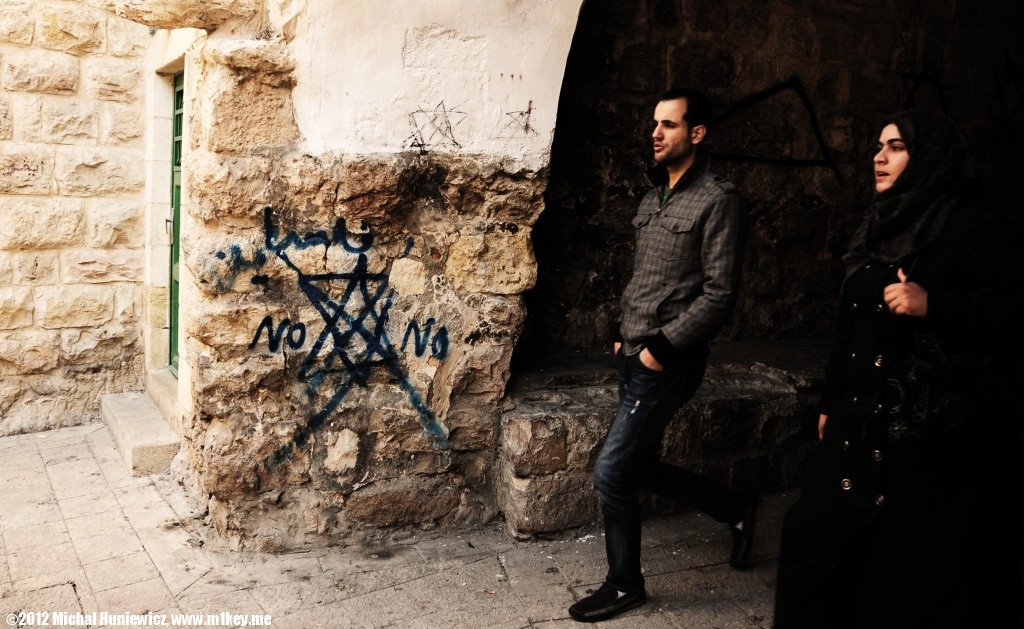
One year after the Six-Day War, in 1968, a Jewish settlement was created there in a somewhat chaotic manner and against the Israeli government. However, after an anti-Jewish attack conducted the same year by a Hebron boy, in which 47 Israels and foreigners were injured, the government legitimised Jewish residency in Hebron. This caused an outbreak of hostilities with local Palestinians, which in turn motivated more settlers to come to Hebron. ISO 200, 18mm, f/3.5, 1/160s.

The little gun girl

The little gun girl
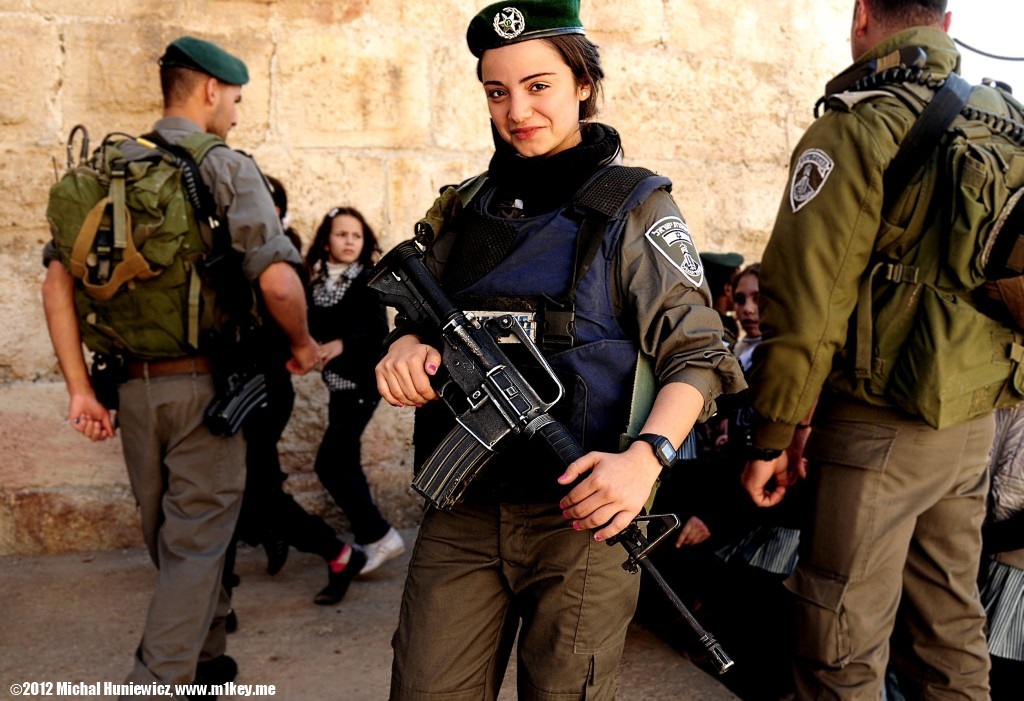
These soldiers are in the Cave of Patriarchs area. In 1994 the man named Baruch Goldstein, an American-Israeli, killed 29 Muslim worshippers there, and wounded 125. Even though he was denounced as insane by most Israelis (78.8% according to a poll) and condemned by Prime Minister Yitzhak Rabin ('you are a shame on Zionism and an embarrassment to Judaism'), the attack set off riots and 19 Palestinians were killed by the IDF (Israeli Defense Forces). Jewish extremists in Hebron consider him a martyr now; while the movement with which he was affiliated was declared a terrorist organisation.
There were soldiers like those in the picture present that day, but they did not stop Goldstein, assuming he was an officer going to pray to the Jewish section of the Cave.
Here, the girl is a soldier working for the border police. The man on the right hand side is her commander. The one on the left is her equal. Her weapon is probably M4. The cables you can see attached to their backpacks are for communication.
ISO 200, 18mm, f/3.5, 1/400s.

Tractor

Tractor
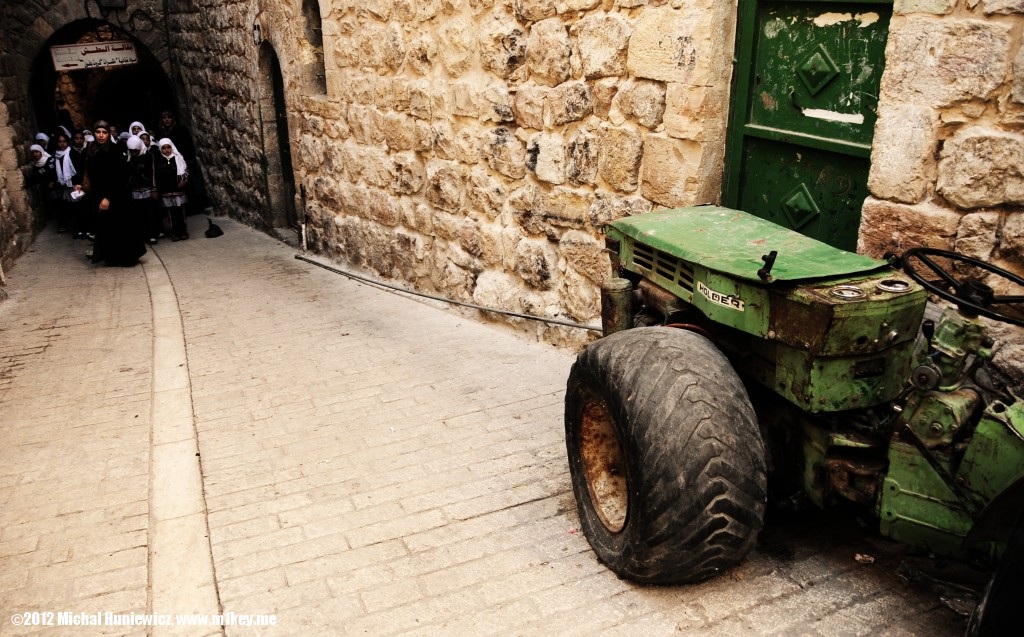
The unemployment rate in the West Bank was 16.5% in 2010, which is 2.5% less than in 2009. Economic growth is 8% (GDP 2009). I found varying data for number of people living below poverty line - between 16% and 50%. The main reasons for poverty are: closures and years of Intifada.
In some places of Hebron Old City there are nets installed over the streets. It is because Palestinians use the streets, while people living above are Israelis and they toss garbage on the Palestinians.
ISO 200, 18mm, f/3.5, 1/160s.

Girls

Girls
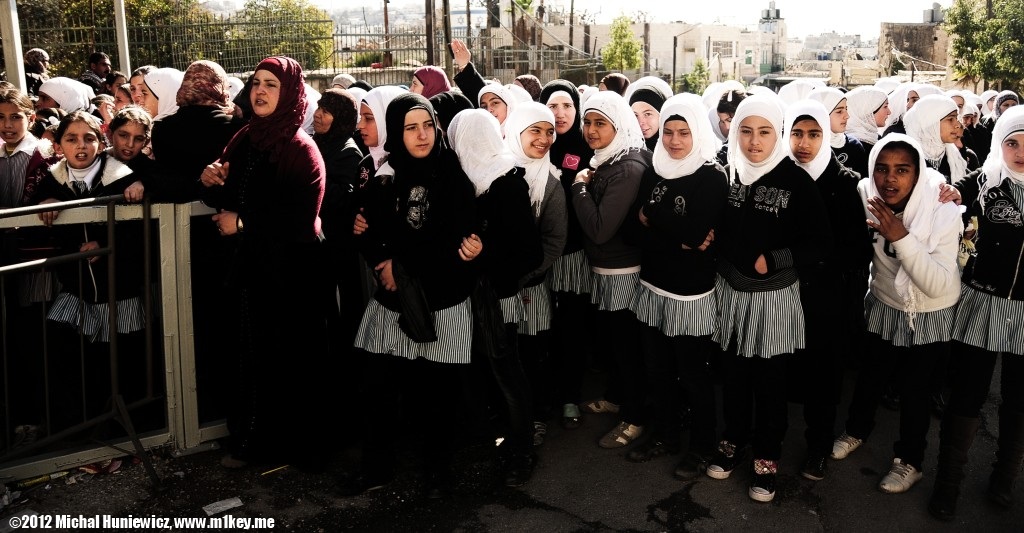
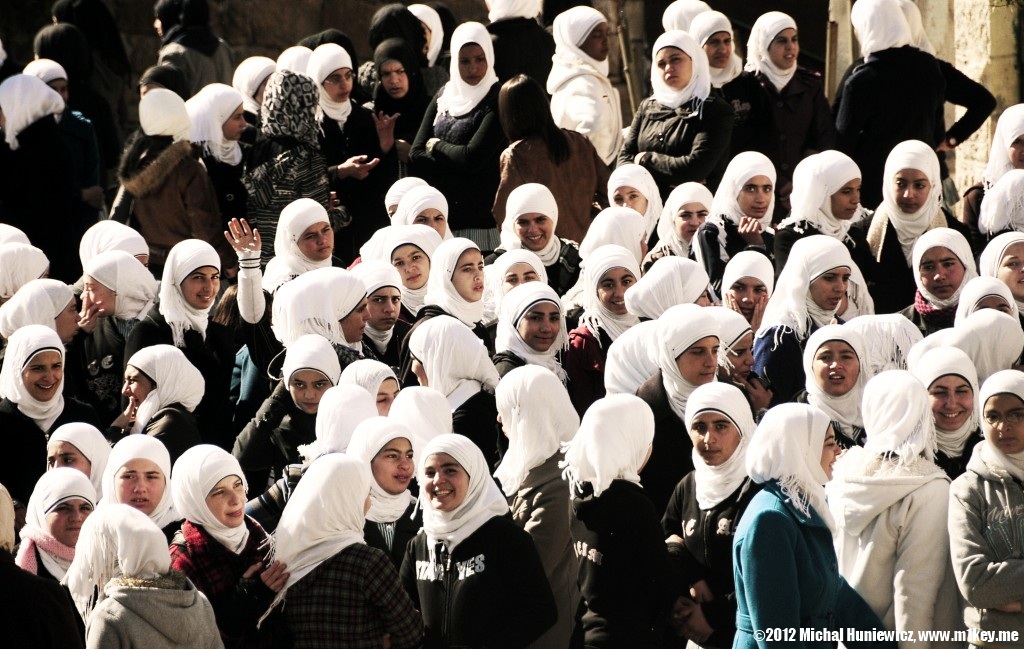
These girls, and there were 70 schools of them, came to Hebron to see me, and to visit the Ibrahim Mosque at the Cave of the Patriarchs site. Because they were Palestinian, they had to wait in a very long queue and pass 3 checkpoints. I didn't because I had a foreign passport. Your foreign passport is a VIP pass in the Middle East. ISO 200, 18mm, f/3.5, 1/1000s.

Waiting

Waiting
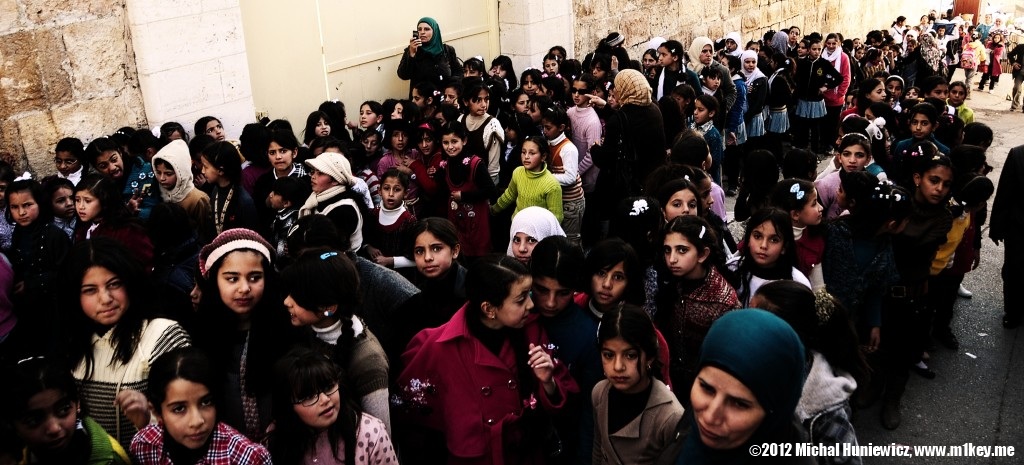
I held my camera high to take this picture and it apparently terrified the girls in the centre. ISO 200, 18mm, f/3.5, 1/200s.

On the Jewish side

On the Jewish side
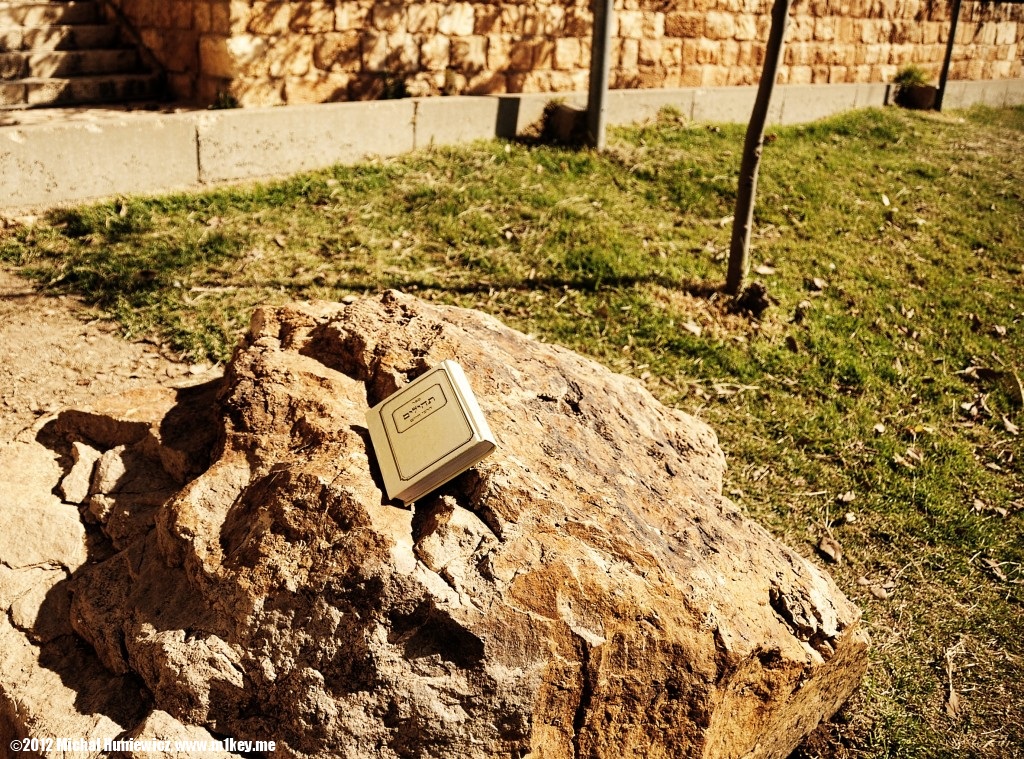
This is on the Jewish side of the Cave. Much more tranquil and much less crowded - their access to the site is not restricted so they can come any time (unlike the Palestinians). The book is Tehillim, the Book of Psalms. It's a book of the Hebrew Bible and the Christian Bible. Jews believe the Psalms were written by David. ISO 200, 18mm, f/3.5, 1/3200s.

Jews praying

Jews praying
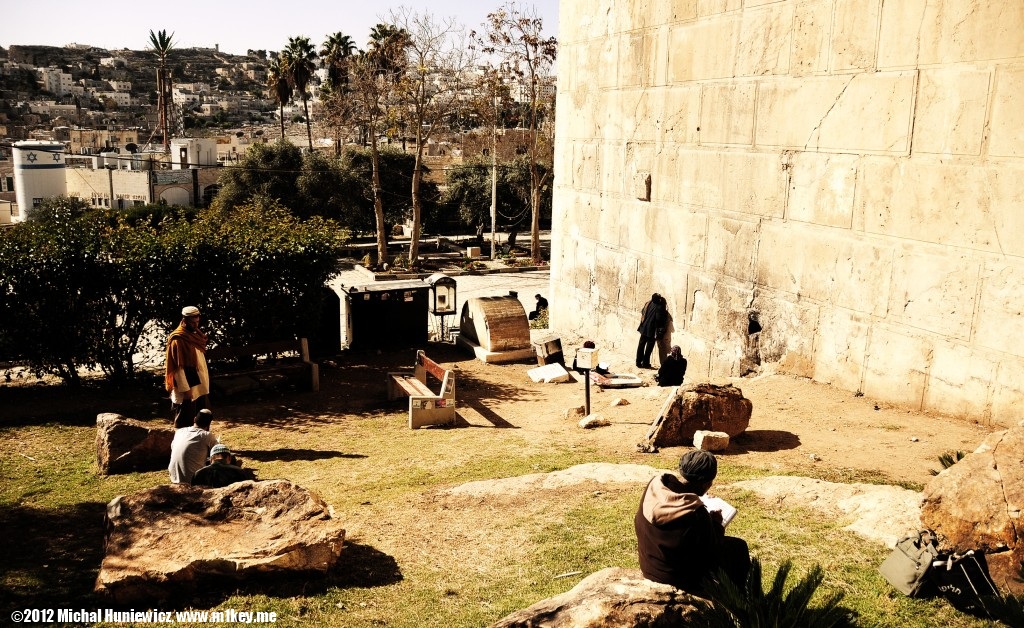
Jews praying. ISO 200, 18mm, f/3.5, 1/2500s.

Acquiring permission to pass

Acquiring permission to pass
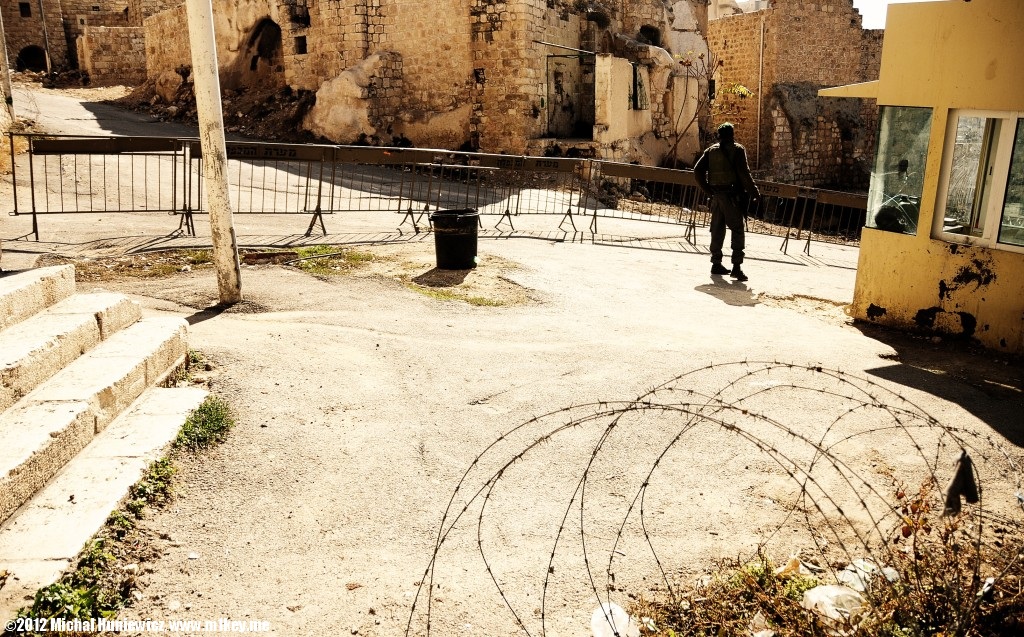
Here, the soldier is deciding whether he should let us pass into this sort of no man's land you can see behind him. Eventually, he called someone using his walkie-talkie and permission was granted. ISO 200, 18mm, f/3.5, 1/2000s.

Bullet

Bullet
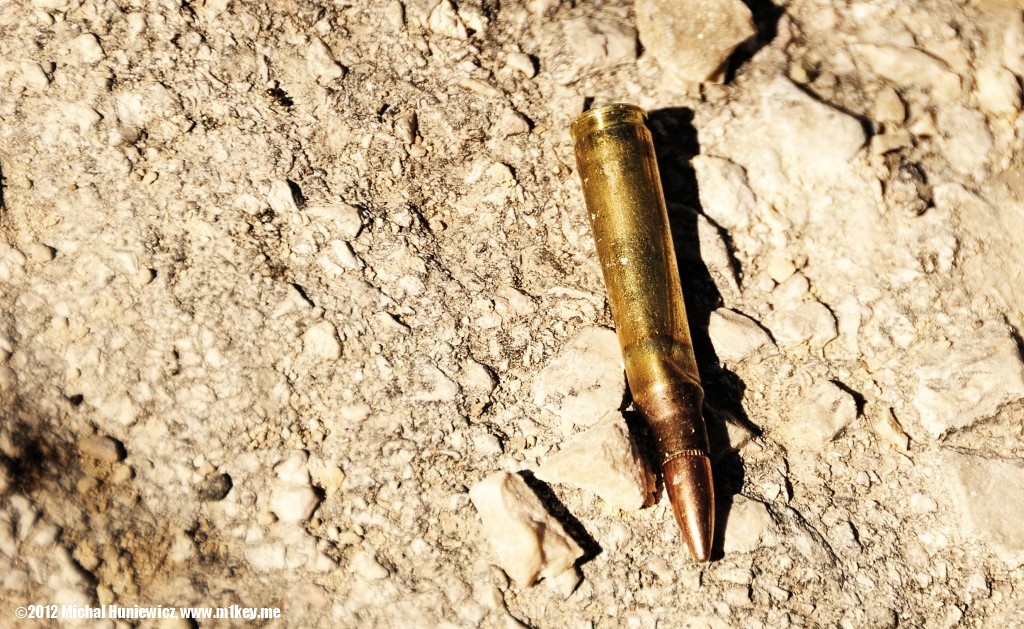
This is what I found on the ground. It is probably an M16/M4 bullet. ISO 200, 170mm, f/5.6, 1/1600s.

Waste Land

Waste Land
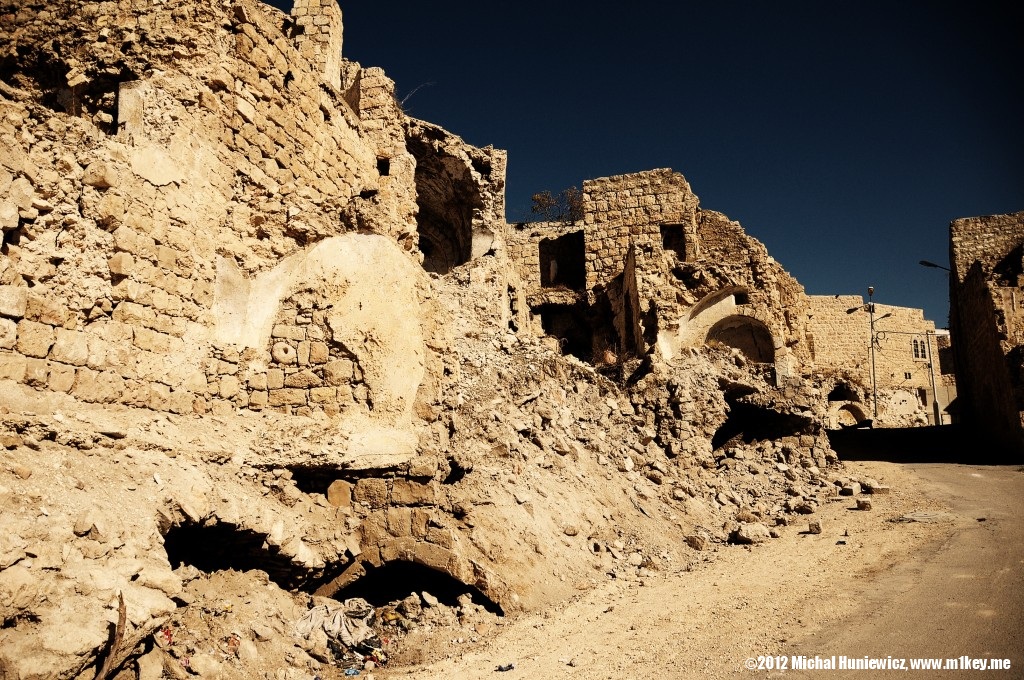
It's very hard to describe the atmosphere there, it felt like the war only ended the day before. I never felt like that in my life. I will ask a poet to help.

A heap of broken images, where the sun beats,
And the dead tree gives no shelter, the cricket no relief,
And the dry stone no sound of water. Only
There is shadow under this red rock,
Come in under the shadow of this red rock,
And I will show you something different from either
Your shadow at morning striding behind you
Or your shadow at evening rising to meet you;
I will show you fear in a handful of dust

(T.S. Eliot, The Waste Land).
ISO 200, 18mm, f/3.5, 1/6400s.

Warning

Warning
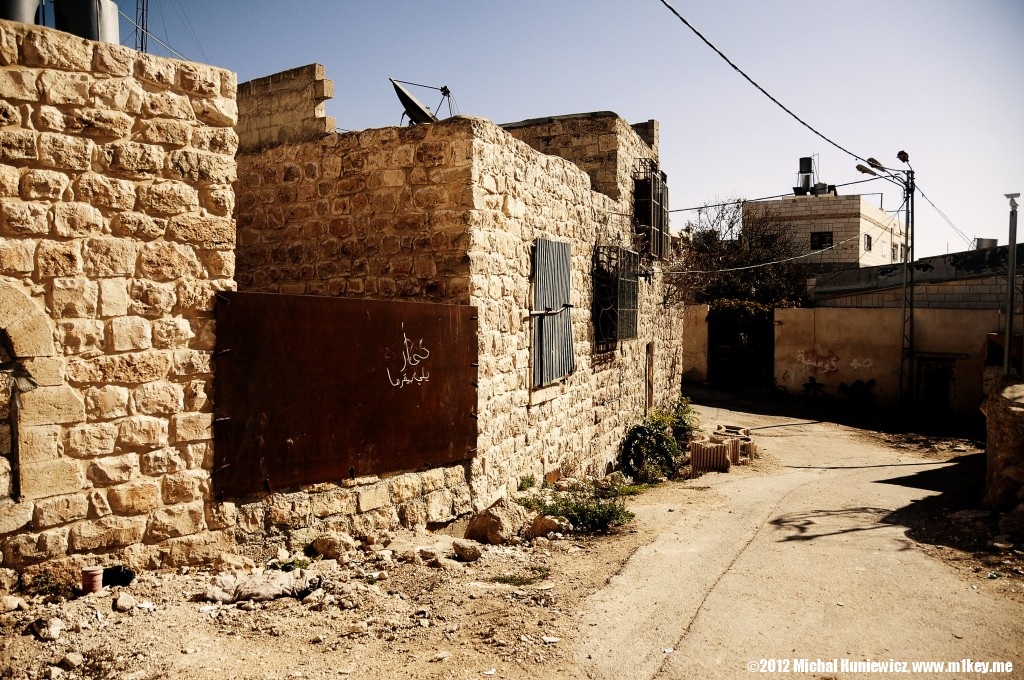
Apparently, the Arabic letters read "Caution! Donkey", but the Arabic is broken so it cannot be said for sure. ISO 200, 18mm, f/3.5, 1/3200s.

Playing

Playing
A Jewish boy playing outside the Cave. ISO 200, 18mm, f/3.5, 1/8000s.

More girls waiting

More girls waiting
More girls waiting. ISO 200, 200mm, f/5.6, 1/1000s.

Spinning

Spinning
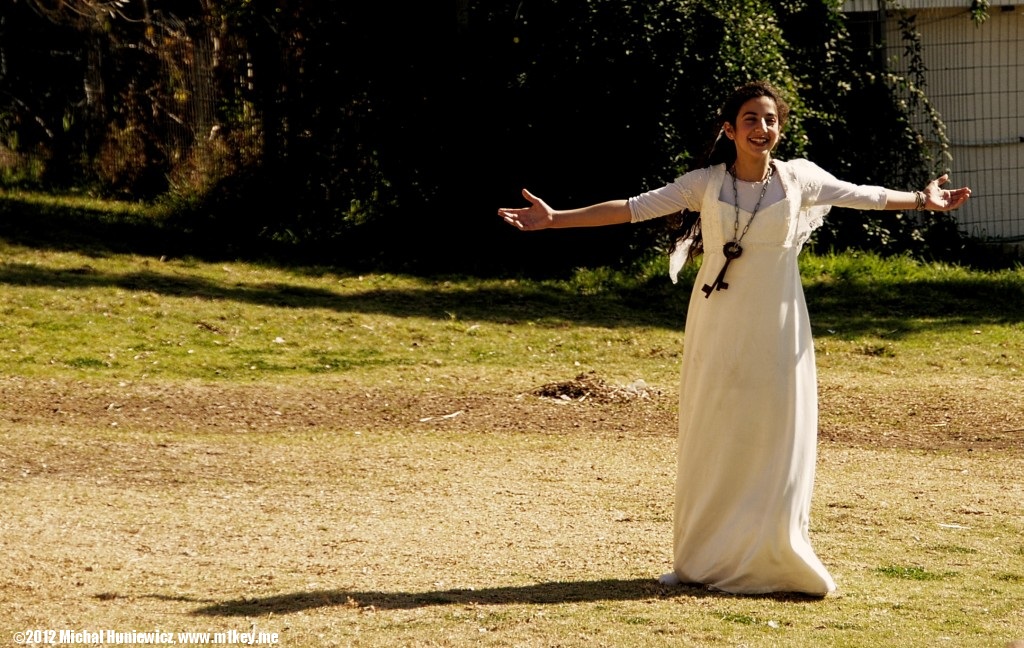
This is a Jewish girl spinning for a video camera recording. ISO 200, 120mm, f/5.3, 1/500s.

Police

Police
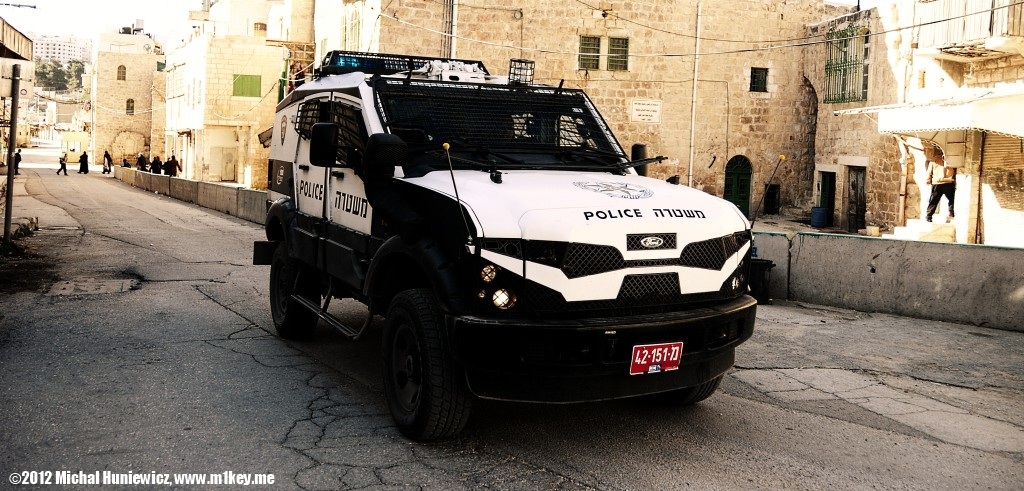
This vehicle is a Plasan Sand Cat. It is used by the police in several other countries as well; it is used in the Mexican drug war for instance. It has a 6.0 L Power Stroke diesel V8 engine and I don't know what it means. ISO 200, 20mm, f/3.5, 1/640s.

You, sir, look a bit too Arab to me

You, sir, look a bit too Arab to me
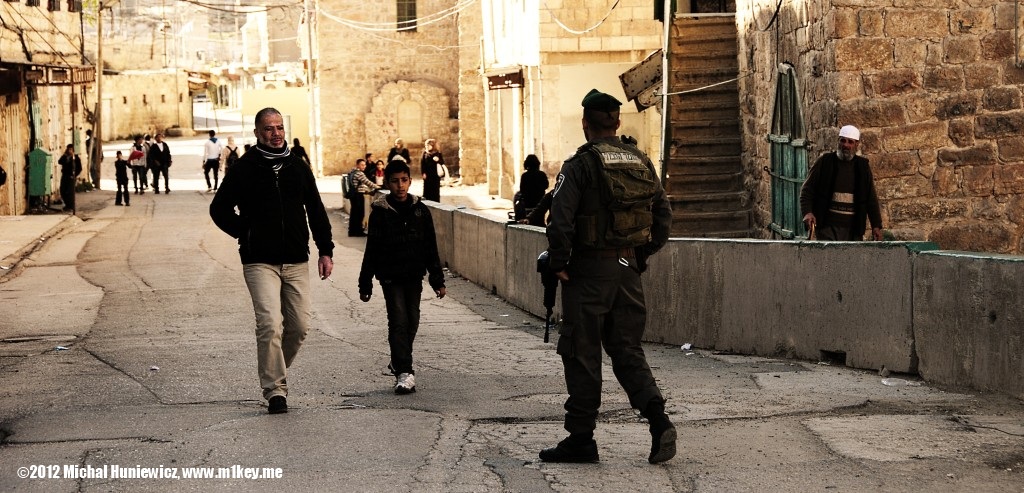
This man, walking on the Jewish side, showed his passport and was allowed to go on. As a foreigner you can walk on both sides of this barricade.
The soldiers in Hebron were generally uneasy. It may seem like there are two sides of the conflict, the Palestinians and the settlers, but actually there are three - the army being the third. They are not particularly liked by either of the other two sides. It is not unheard of that the Israeli soldiers protect Palestinians, often children, from stone hurling settlers.
There is a website that collects Israeli soldiers' testimonies, from the West Bank, but also Gaza and East Jerusalem.
ISO 200, 62mm, f/4.8, 1/400s.

Camel butcher

Camel butcher
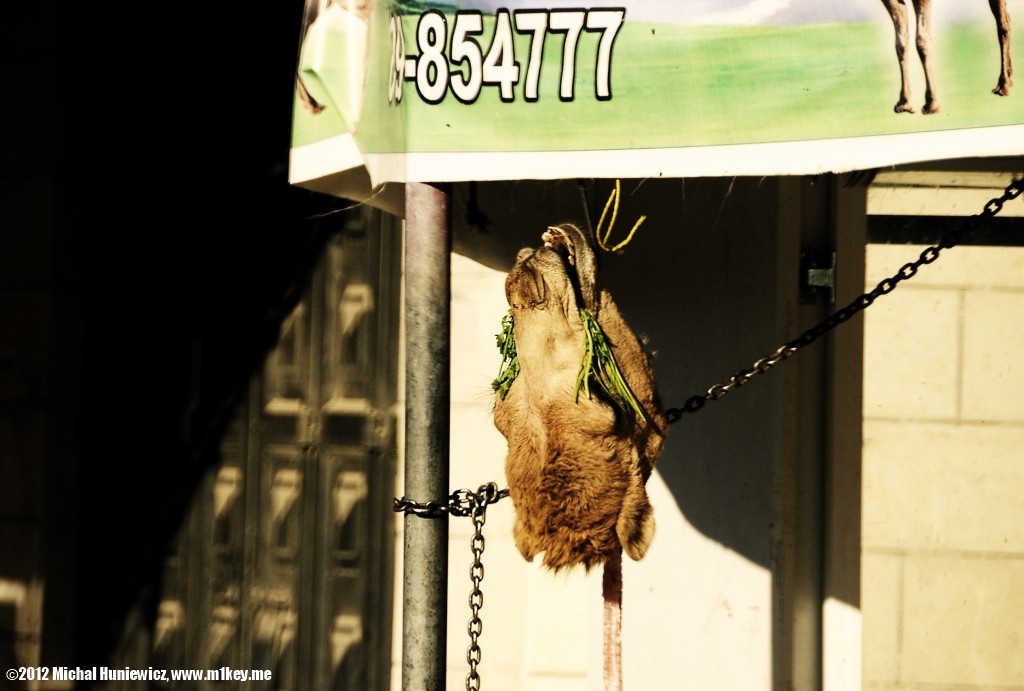
Apparently, camel hump is considered a delicacy. Camel meat is low in fat; it is sometimes mixed with beef or lamb fat to improve taste. Camel blood, on the other hand, is a precious source of iron, vitamin D, salt, and minerals. Camel meat is halal but it is not kosher. ISO 200, 200mm, f/5.6, 1/1000s.

Concrete tower

Concrete tower
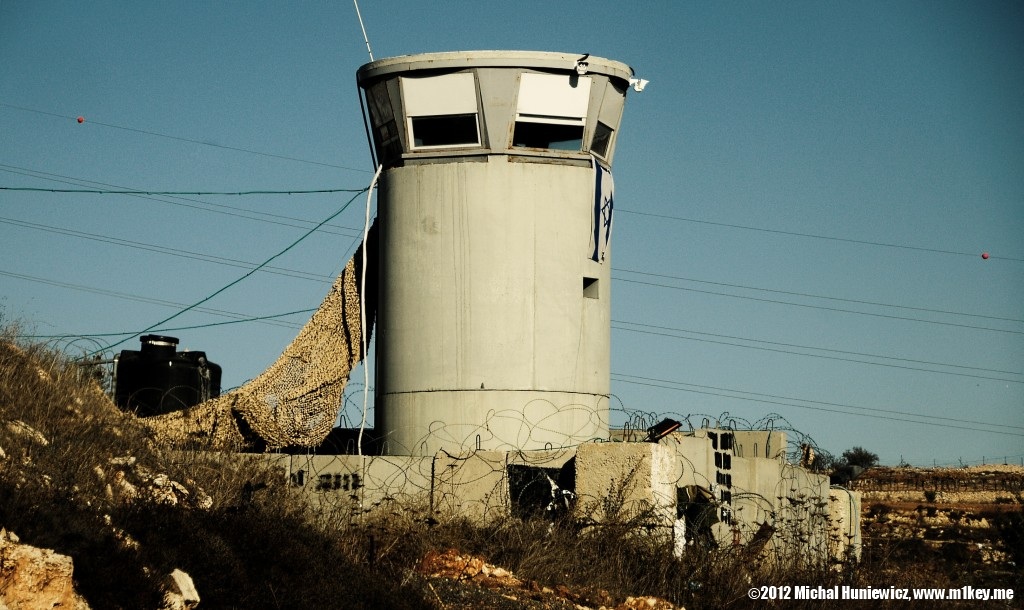
This is an Israeli concrete tower, more like a stronghold. They are used to monitor and control traffic. Some have a "crown" of cameras around them. ISO 200, 90mm, f/5.3, 1/2000s.

Area 'A'

Area 'A'
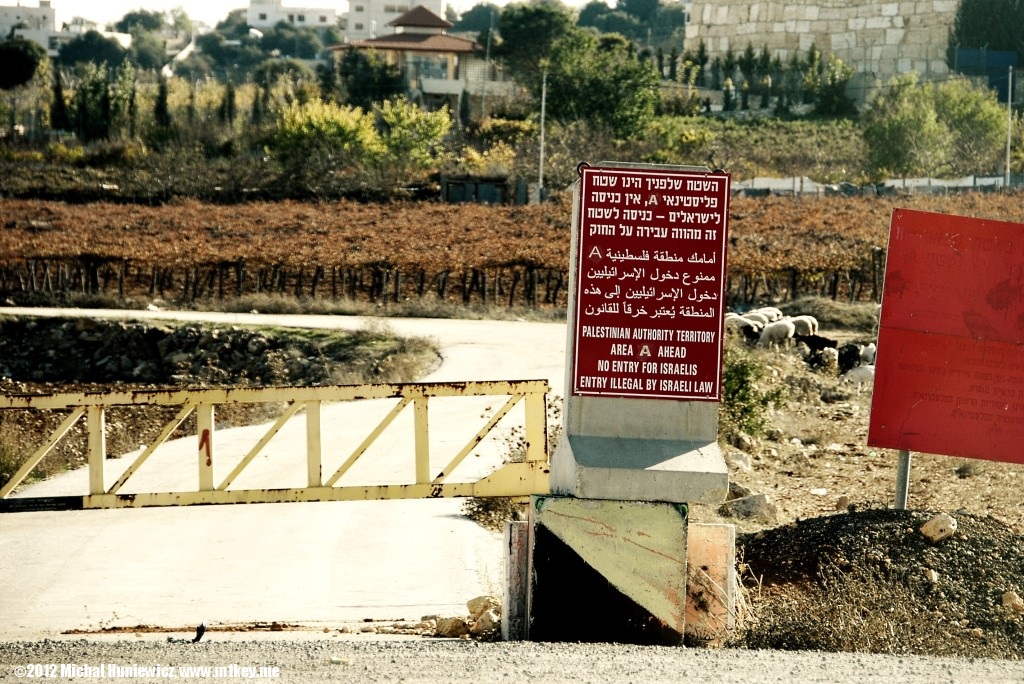
After the Oslo Accords (1993) the West Bank and Gaza Strip were divided into three areas, 'A', 'B', and 'C'. In the picture, you can see area 'A' that is 17.2% of the West Bank and remains under full Palestinian control, both civil and military. There are no settlements there. Entry is forbidden for Israeli citizens. The Israel Defense Forces are not present there - but it does happen that they make raids against militants.
Area 'B' (23.8%) is under Palestinian civil control and joint Israeli-Palestinian security control. No settlements there either. Area 'C' remains under full Israeli control, but not over Palestinian civilians.
ISO 200, 105mm, f/5.3, 1/400s.

Roads

Roads
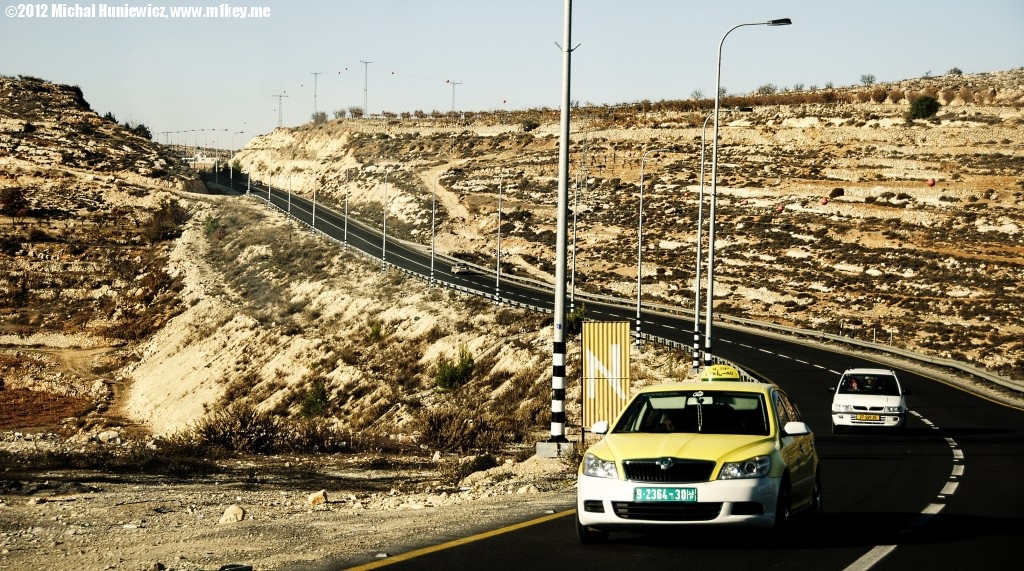
The roads are much better than in Poland! ISO 200, 52mm, f/4.8, 1/1250s.

Military truck

Military truck
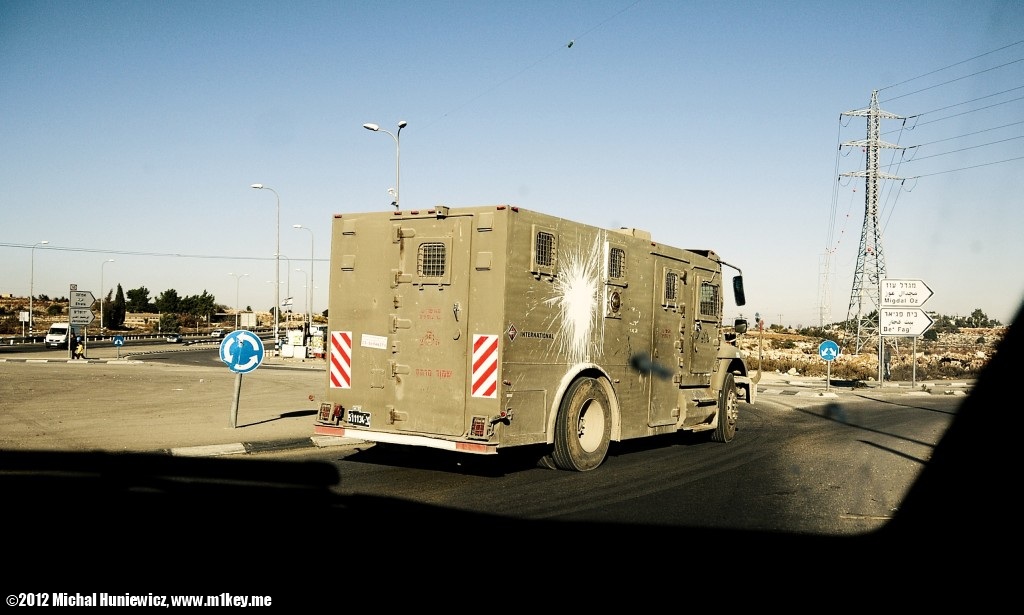
This is an Israeli military truck. As you can see, someone has thrown paint on it. ISO 200, 18mm, f/3.5, 1/2500s.

Settlement

Settlement
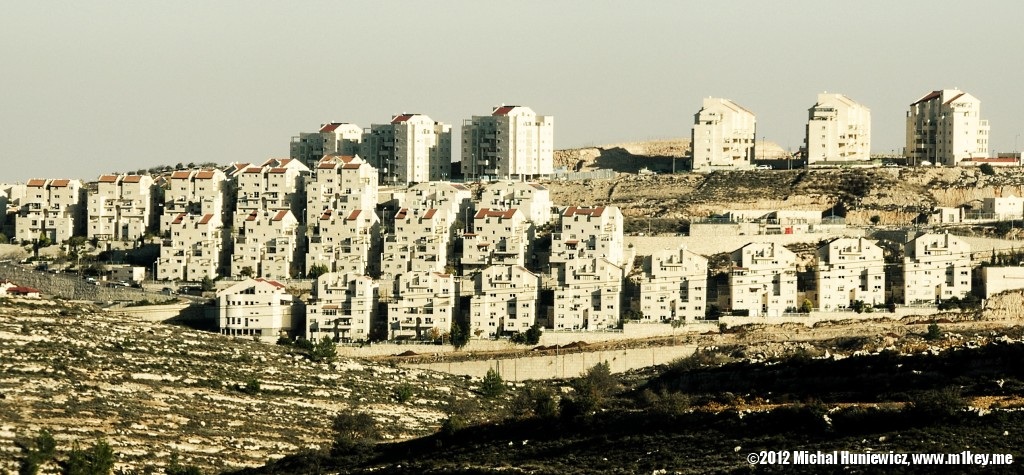
This is an Israeli settlement. Unfortunately, I did not have an opportunity to go there and talk to the people. From what I was told, there are two factors that motivate people to move to such a settlement. One, religious and ideological reasons, taking over the West Bank. Two, economic reasons - living there is much cheaper than in Jerusalem or Tel Aviv, at least as property prices are concerned. ISO 200, 105mm, f/13.0, 1/250s.

Donkeys

Donkeys
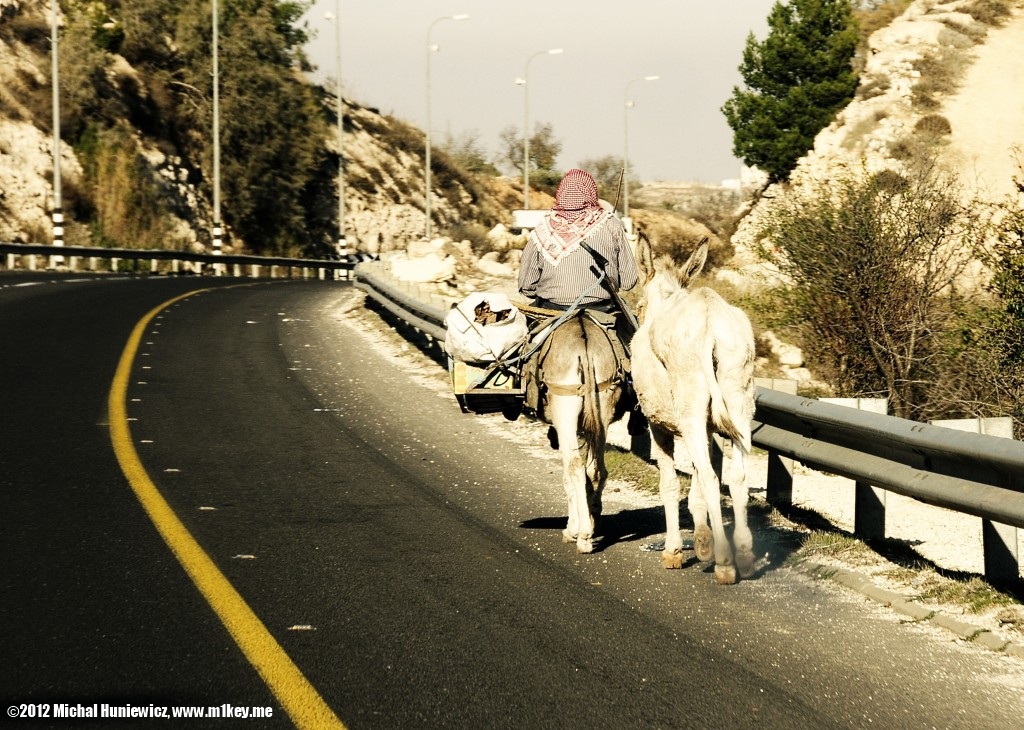
I was told that on this road there had been a 'situation' not long ago before I visited. An Israeli soldier was standing on the road with a torch, at night, asking cars to stop. One of the drivers did not know what the light was so he just passed it by. The soldier turned around and began shooting. They are supposed to aim for the wheels - and maybe he did, but he hit the driver and his son. They were Israeli settlers. There was another car coming and they did not see the soldier who was no longer holding the light (because he was shooting) so they ran over him. ISO 200, 112mm, f/11.0, 1/250s.

Bethlehem refugee camp

Bethlehem refugee camp
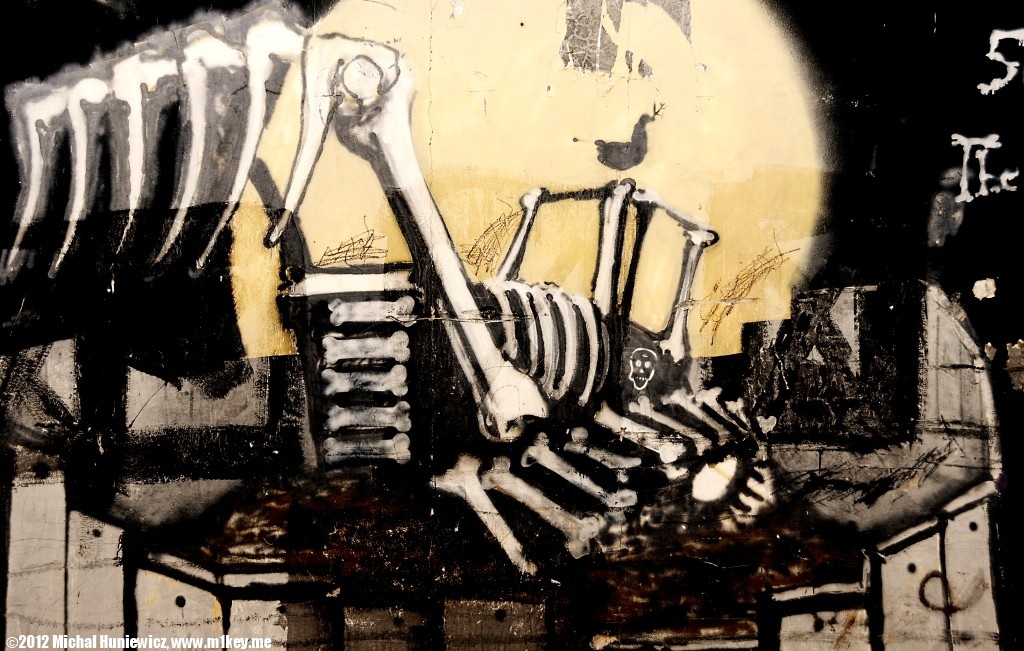
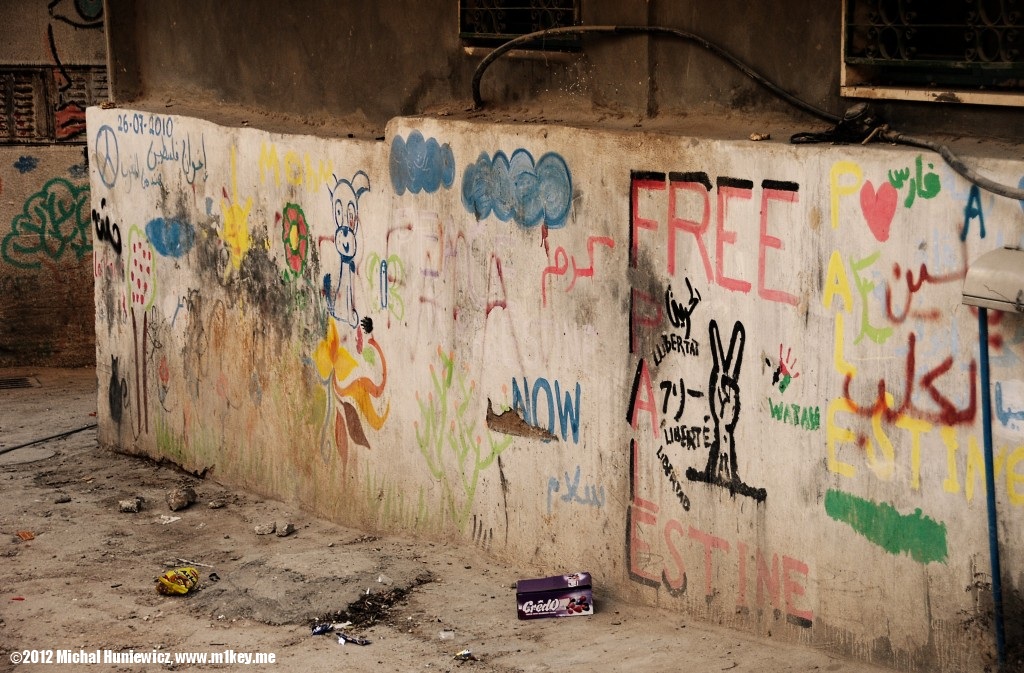
This is a mural in Dheisheh which is a Palestinian refugee camp in Bethlehem. It was established in 1949 and was supposed to be a temporary refuge for 3,400 Palestinians who fled during the 1948 Arab-Israeli War. The camp has since expanded in size, as there are more people living there now (there is a disagreement over how many; but probably somewhere between 8 and 14 thousand). ISO 200, 31mm, f/4.2, 1/250s.

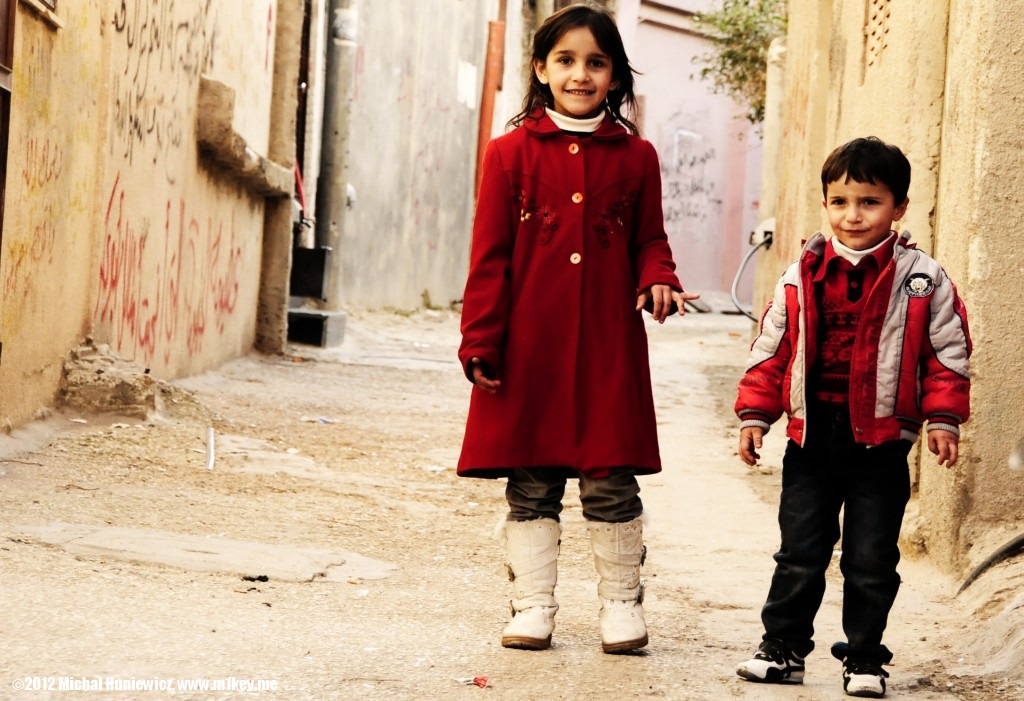
Children in the camp

Children in the camp
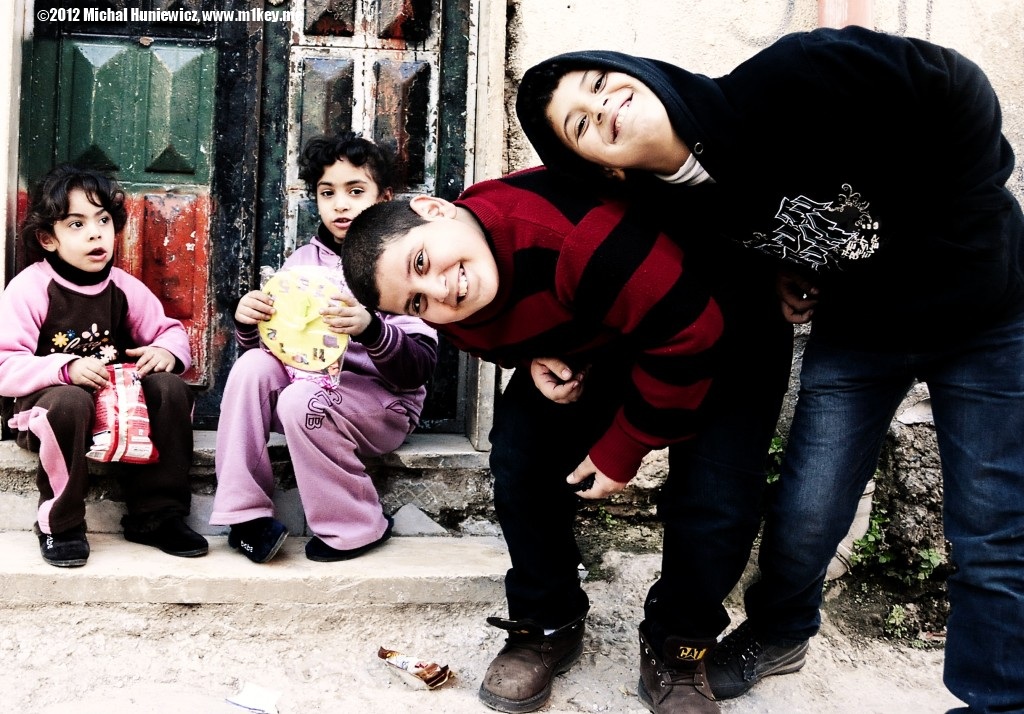
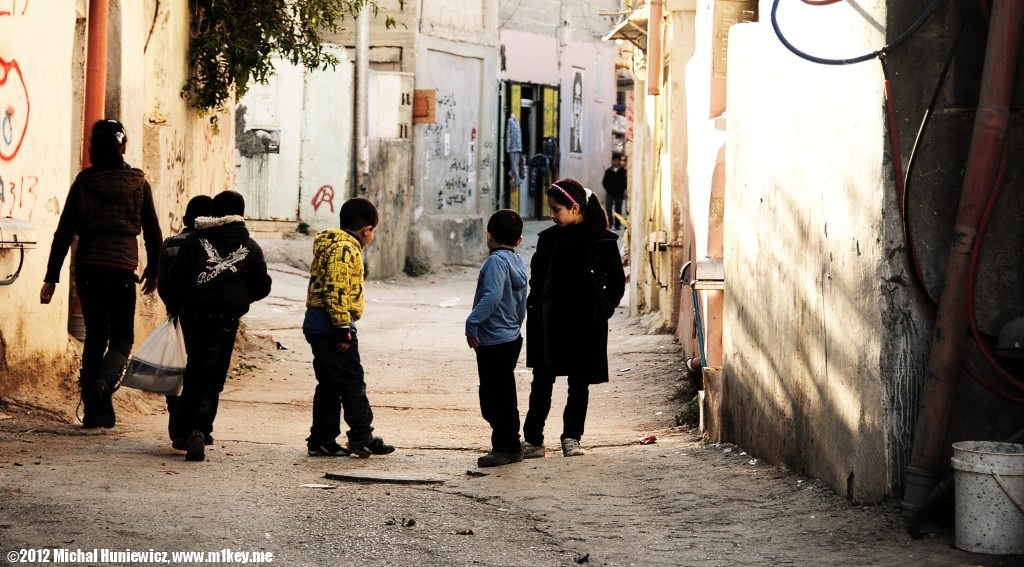
The camp was initially just tents, but now they have buildings and all of them are connected to water and electric systems. 85% of the houses are also connected to the public sewage system. For the remaining 15% there are communal percolation pits. ISO 1100, 18mm, f/3.5, 1/250s.

Refugee camp

Refugee camp
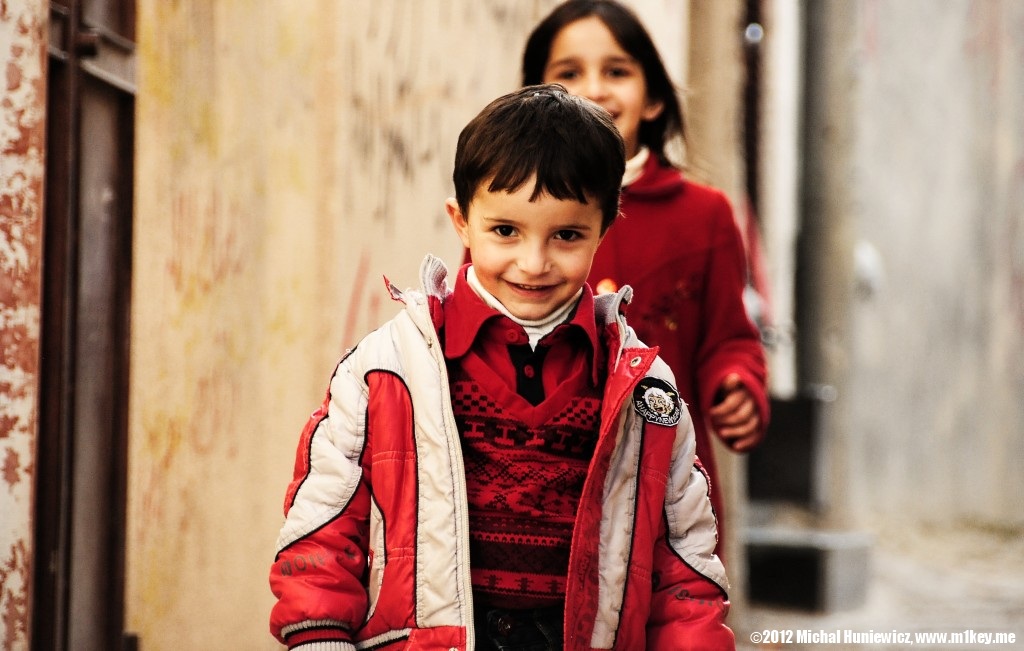
There is free education for women and children. ISO 360, 75mm, f/5.0, 1/250s.

Children

Children
There are three health centres, one food distribution centre, one community-based rehabilitation centre. One third of the people are unemployed. ISO 1100, 200mm, f/5.6, 1/250s.

Children

Children
There are several programmes, including microfinance and social safety-net programmes. ISO 800, 52mm, f/4.8, 1/250s.

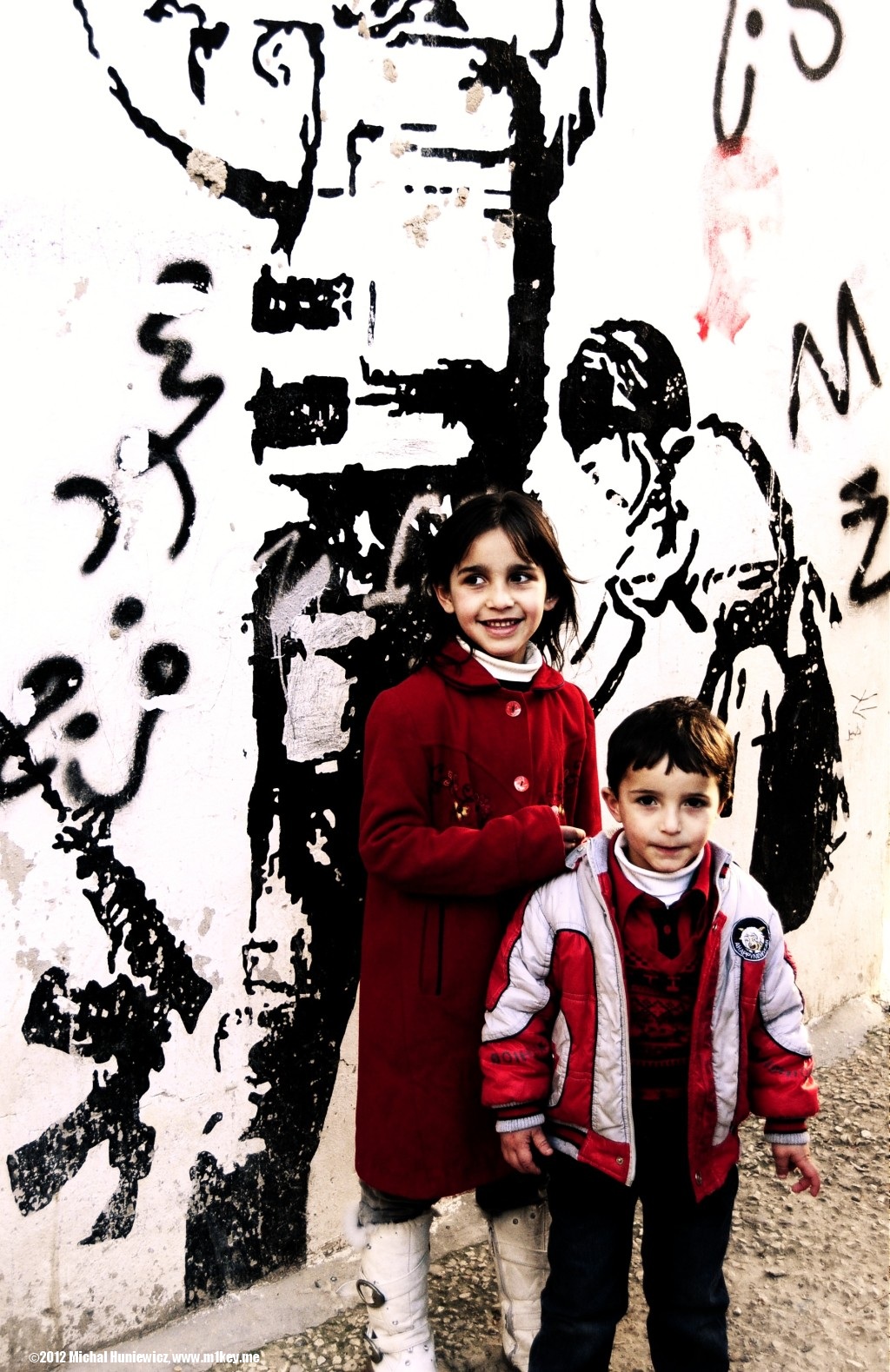
Children

Children
These children are posing in front of a copy of Banksy's mural in Bethlehem. ISO 640, 31mm, f/4.0, 1/250s.

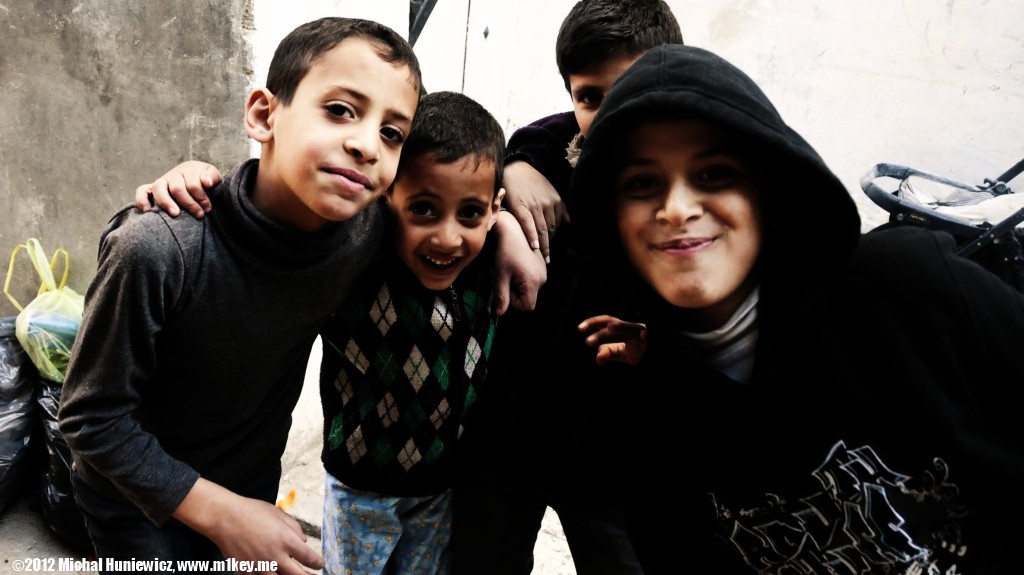
Pictures, pictures!

Pictures, pictures!
Pictures, pictures! ISO 1100, 18mm, f/3.5, 1/250s.

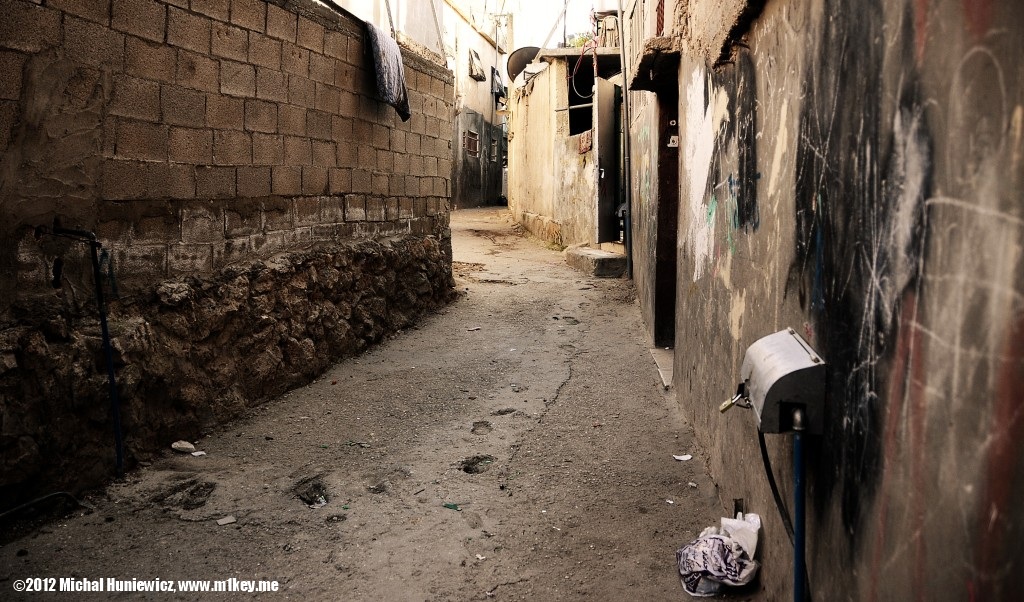
Refugee camp

Refugee camp
As you can see, the camp area is rather poor. ISO 200, 18mm, f/3.5, 1/200s.

Murals

Murals
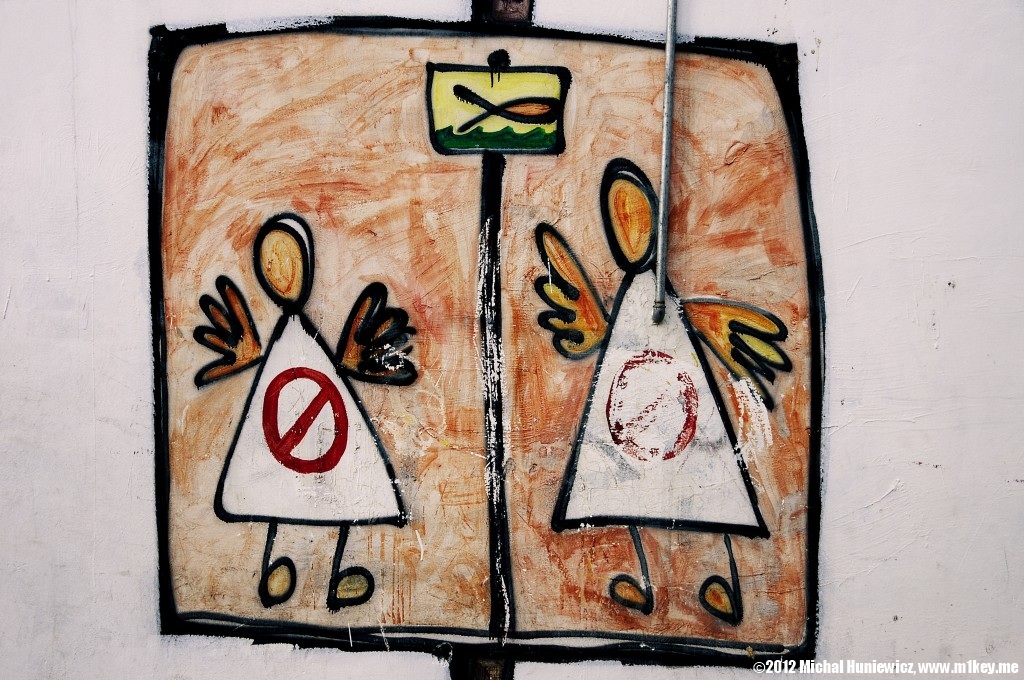
Murals. ISO 200, 60mm, f/4.8, 1/125s.

Another mural

Another mural
Another mural in the camp. ISO 200, 24mm, f/3.8, 1/250s.

Banksy

Banksy
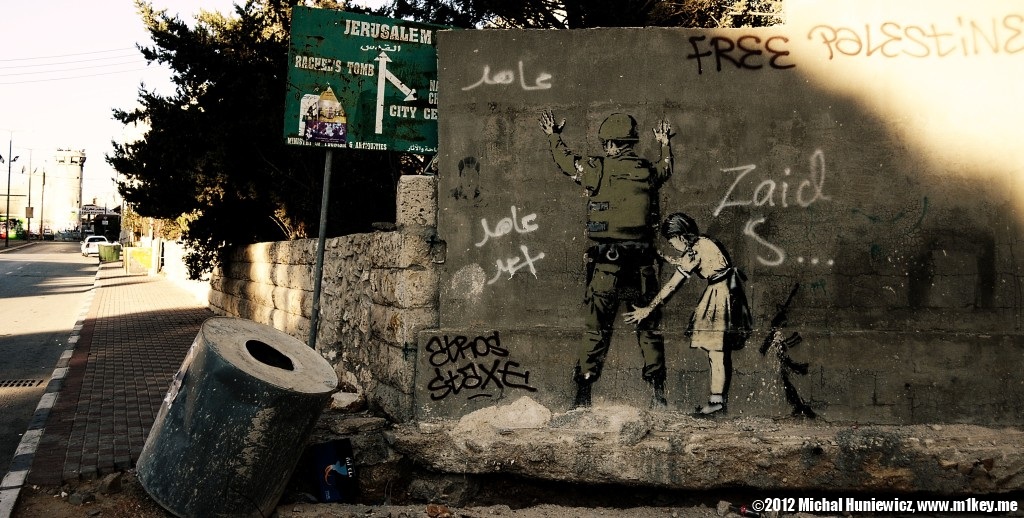
This is the original Banksy. One of six in the Betlehem area (some on the barrier). It shows a girl frisking a soldier. It appeared in 2007. The British artist Banksy is not well known there and the mural is not protected in any way. ISO 200, 22mm, f/3.8, 1/800s.

Israeli West Bank barrier

Israeli West Bank barrier
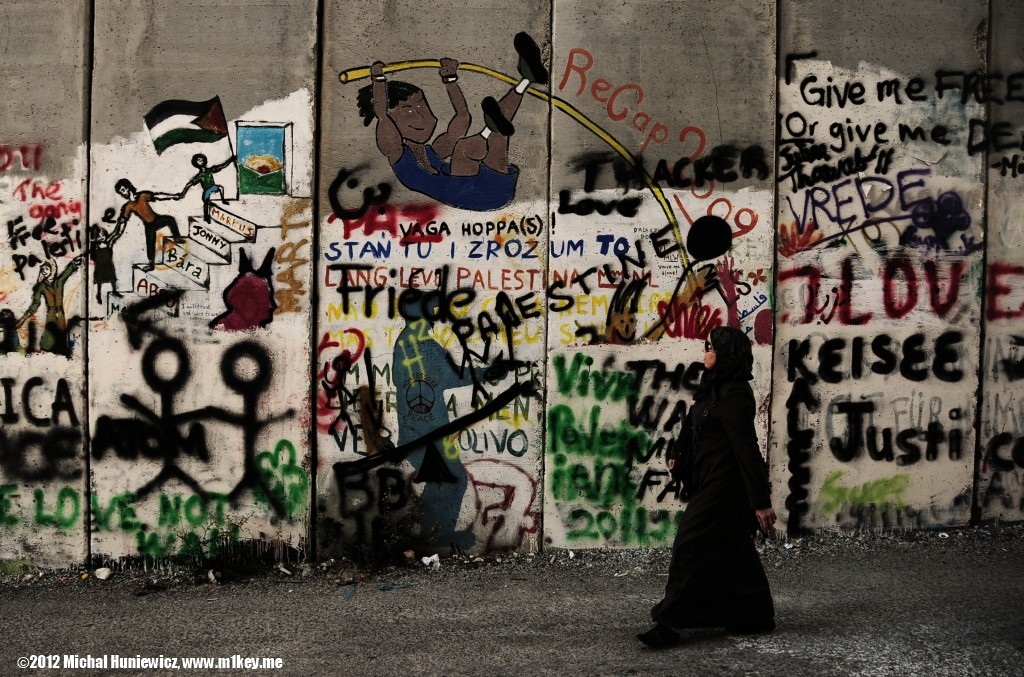
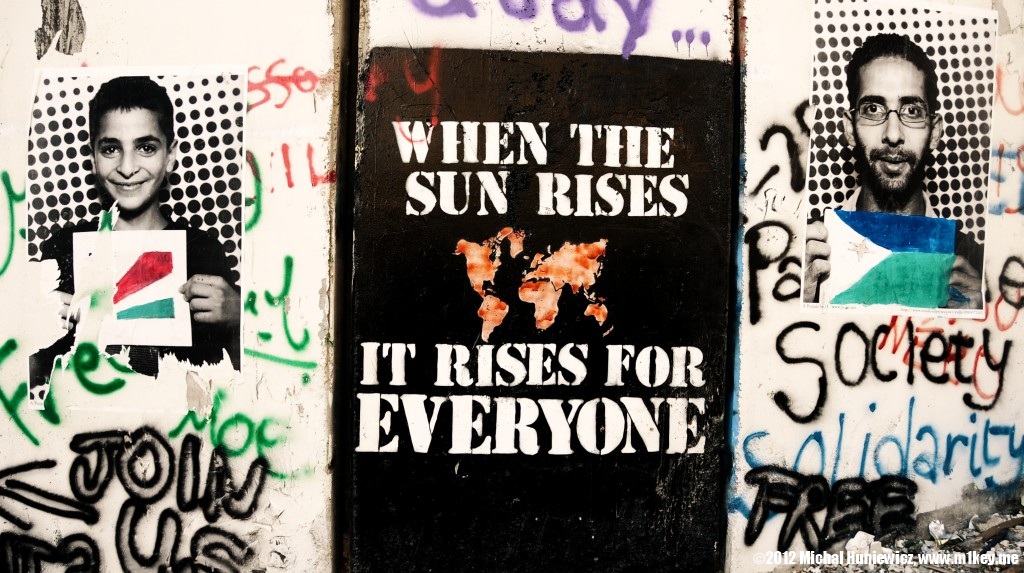
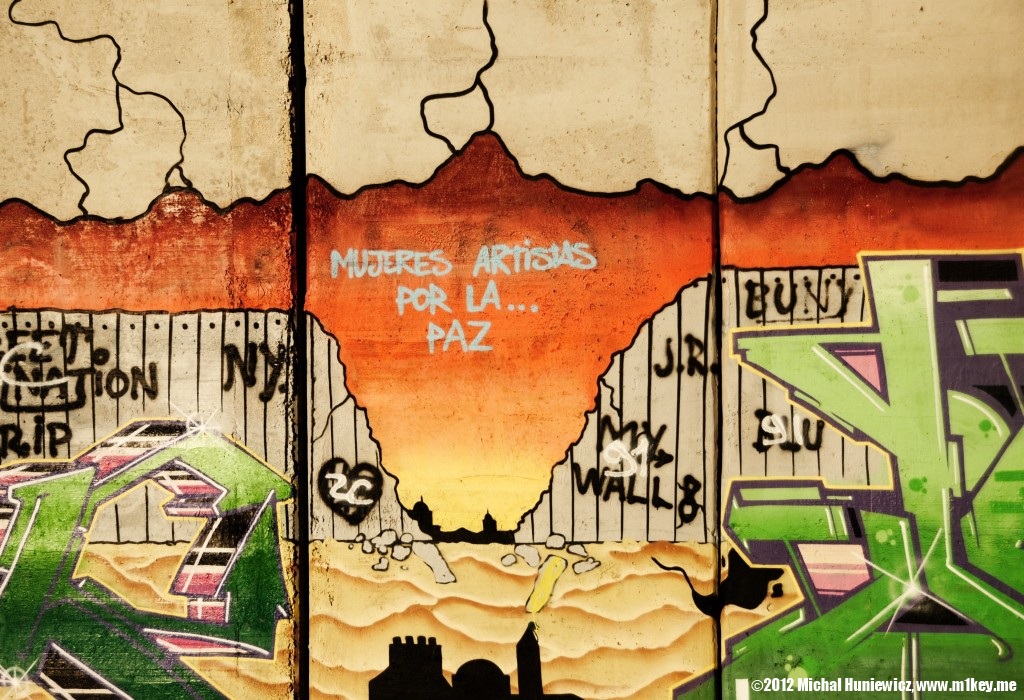
This is the Israeli West Bank barrier in Bethlehem, also known as the separation fence, anti-terrorist fence (among Israelis); racial segregation wall or Apartheid Wall (among Palestinians). The BBC's style guide suggests calling it 'barrier', 'separation barrier', or 'West Bank barrier'. ISO 200, 18mm, f/3.5, 1/320s.

West Bank barrier

West Bank barrier
The barrier has succeeded in reducing the number of terrorist attacks (for instance, between August of 2003 and December of 2006 only 12 attacks were carried out, as opposed to 73 attacks between 2000 and 2003 when the wall was less complete).
On the other hand, since 12% of the West Bank is on the Israeli side of the barrier, opponents argue that the real purpose of the wall is to illegally annex Palestinian land, which undermines negotiations. According to the International Court of Justice, "the construction of the wall, and its associated régime, are contrary to international law". The wall was also condemned by the EU and was criticised by prominent American politicians, such as George W. Bush and Colin Powell in 2003.
Interestingly, the barrier is also criticised by some Jewish settlers - because it appears to renounce the Jewish claim to the whole of the Land of Israel.
The Polish-Jewish sociologist, Sygmunt Bauman, compared the barrier to the Warsaw Ghetto walls.
Most Israelis seem to be pro-wall, as it has improved security.
ISO 200, 18mm, f/3.5, 1/250s.

Current situation (early 2012)

Current situation (early 2012)
Because the wall has succeeded to reduce terrorist attacks inside Israel, and because of the 2007 agreement between Israel and the Palestinian National Authority, the actual construction of the wall has almost ceased.
It's worth mentioning that it has happened at least once that an entire vertical piece of the wall was stolen and sold.
ISO 200, 42mm, f/4.5, 1/2500s.

Church of the Natvity in Bethlehem

Church of the Natvity in Bethlehem
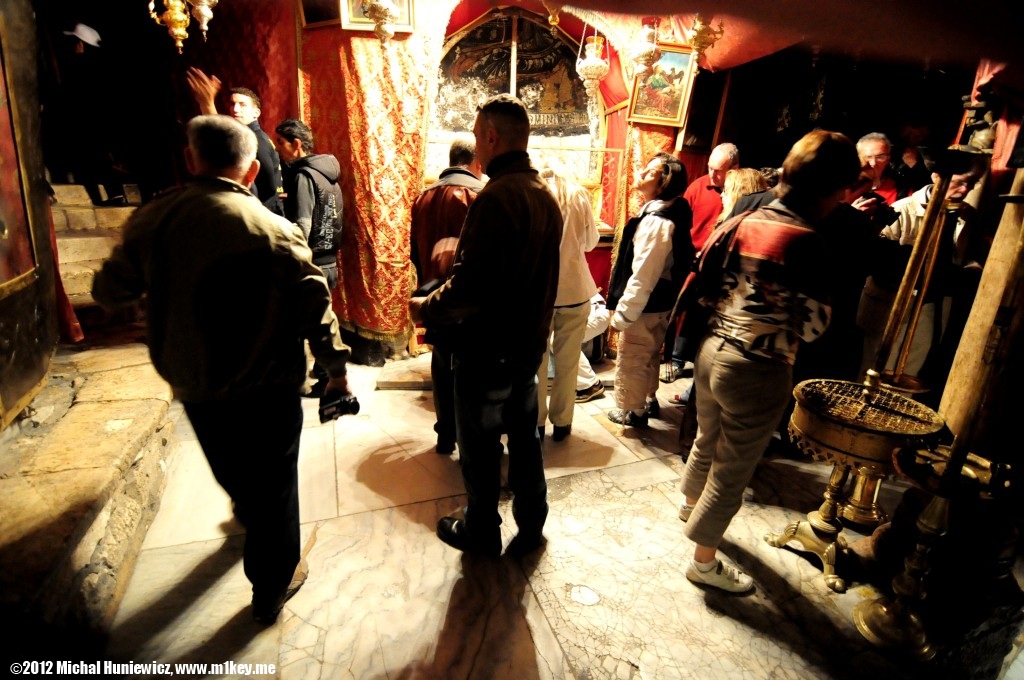
Here, according to the Christian legend, Jesus was born (where a person can be seen ducking). You come in from the right and leave using the stairs on the left, as the grotto is below the church level. There was a fairly long queue there and, bored, our guide and us began singing Tom Jones' songs, when a Greek Orthodox priest with a very long beard rushed to us alarmed and said "Silence!". He then took one step back and drawled out like a mad man "Be careful...". Our Palestinian guide was a bit upset by that. "It's my country! And besides, Jesus was born here, we should be happy".
The priests have their own idea of proper behaviour.
ISO 3200, 11mm, f/2.8, 1/25s.
Sources